
Working in a knitting shop means talking to knitters all day, every day. From complete beginners buying their first needles and yarn, to confident knitters casually discussing cable jumpers and colourwork like it’s second nature, conversations about knitting never stop.
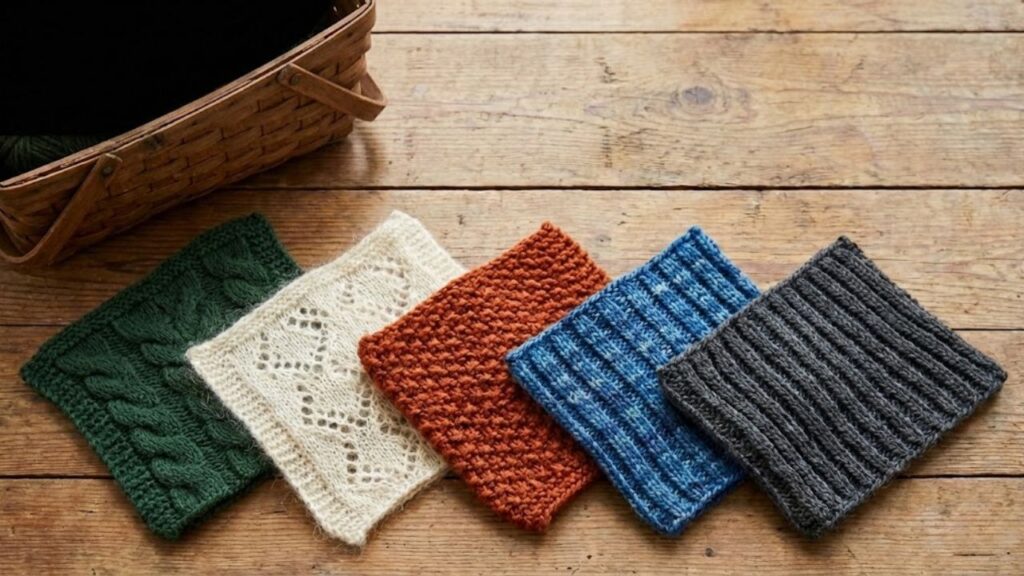
While yarn and tools keep the lights on, most of the job is actually about sharing knitting advice. We talk about current projects, future plans, yarn choices, favourite needles, and how to match the right yarn to a newly downloaded pattern. Helping knitters solve problems and feel confident in their projects is easily the best part of the role.

Over time, a few topics come up again and again, especially with beginner knitters. I could talk about knitting tips all day, but to keep things focused, here are three pieces of knitting advice every knitter should hear, straight from someone who works in a knitting shop.
1. Always knit a swatch and check your gauge
I know this isn’t the fun part. You’ve chosen your pattern, bought the yarn, and you’re desperate to start knitting the finished piece—not a tiny square. But if there’s one bit of advice that matters most, it’s this: knit a swatch.

Why gauge and swatching really matter
Many knitters say, “I usually meet gauge, so it’ll be fine.” What that often means is their tension tends to be average. While something like 22 stitches over 10cm on 4mm needles in DK yarn is common, that doesn’t guarantee success.
Every yarn behaves differently. Your tension needs to match the designer’s tension, not just a standard number. And just as importantly, your fabric needs to look and feel the way the designer intended.
Some patterns are forgiving and allow a wide range of gauges, while others rely heavily on precise stitch and row tension. Designers also knit differently—some tighter, some looser—which directly affects how a finished garment fits and drapes. Even if you usually hit gauge, swatching is still essential unless you’ve already tested that exact yarn and pattern combination before.
What a swatch actually tells you
A swatch shows whether your knitting matches the pattern’s requirements. That alone can be the difference between a garment that fits perfectly and one that’s far too big or uncomfortably small.
It also helps you understand the yarn itself. You can see how the fabric behaves, whether it’s drapey or dense, how soft it feels, and whether you even like how the colours look once knitted. A swatch lets you confirm everything is right before you commit, which saves time, money, and disappointment.
2. Choose natural fibres so you can properly block your knits
For beginner knitters, acrylic yarn is tempting. It’s affordable, accessible, and feels like a safe option when you’re just starting out. That makes total sense, especially when the cost of a full sweater’s worth of yarn feels intimidating.
But learning doesn’t mean you have to rely on acrylic. You can knit a 100% wool sweater on a budget if you choose carefully—and the benefits are huge.
Why wool is worth it
The biggest advantage of natural fibres like wool is blocking. Wool responds beautifully to washing and shaping. The fabric relaxes, stitches even out, and the finished piece instantly looks more polished.
Think of it like hair: natural fibres can be reshaped and reset, while synthetic fibres stay exactly as they are. Wool behaves the same way. Blocking can transform something that looks uneven into a garment that feels intentional and well-made.

Why acrylic doesn’t behave the same way
Acrylic yarn doesn’t block in the same way wool does. Once it’s knitted, what you see is mostly what you get. That can be frustrating, especially after investing hours into a project.
I learned this the hard way on an early cardigan project knitted entirely in acrylic. The fabric needed a good block to soften and relax—but that simply wasn’t possible. The result never improved, despite the time and effort involved.
Acrylic has its place, but if you’re able to wear wool and enjoy knitting with it, natural fibres are absolutely worth choosing, especially for garments.
3. Start with smaller projects so you actually finish them
Many beginners start with a scarf because it feels easy. And technically, it is. But scarves are long, repetitive, and can quickly become boring, especially when you’re knitting the same stitch for weeks.
Why finishing projects matters
Completing a project is incredibly motivating. Casting off and wearing something you’ve made gives a real sense of achievement. That feeling keeps you excited about knitting and eager to start the next project.
If you truly want to knit a scarf, go for it. But if you’re choosing one simply because it feels like the “correct” beginner option, it might be worth reconsidering.
Small projects build skills and confidence
Smaller projects like headbands, snoods, hats, or simple accessories are ideal for beginners. They’re quick to finish, teach useful skills, and provide frequent wins. You’ll learn more in less time and feel far more confident moving forward.
That confidence is what eventually leads to tackling sweaters and larger garments successfully—rather than abandoning half-finished projects that end up forgotten in a cupboard.
Starting small helps you stick with knitting, enjoy the process, and actually complete what you cast on.
I hope at least one of these tips helps improve your knitting. Everyone has their own approach, and these are simply lessons learned from daily conversations in a knitting shop. If something resonated with you, or if you have advice you think other knitters should hear, a good knitting chat is always welcome.